How to Organize a Small Room: 6 Practical Ways to Gain Space
A small room does not have to feel cramped. Start with sorting, use vertical space, and choose storage that fits your belongings, in six practical steps.
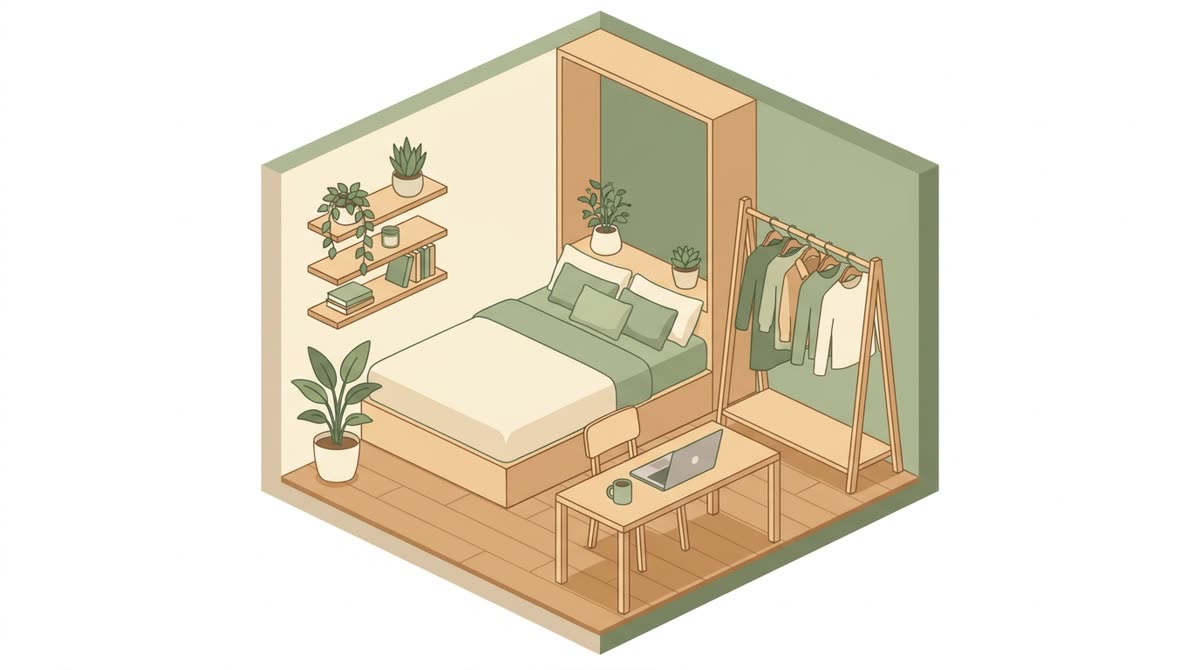
Step 1: Sort before you store
The fastest way to gain space is to own less clutter, not to buy more containers. Take everything out of one area, such as a drawer or a shelf, and sort it into three groups: keep, give away or sell, and throw away.
Work on one area at a time so you finish what you start. Storage works best when it holds only the things you actually use.
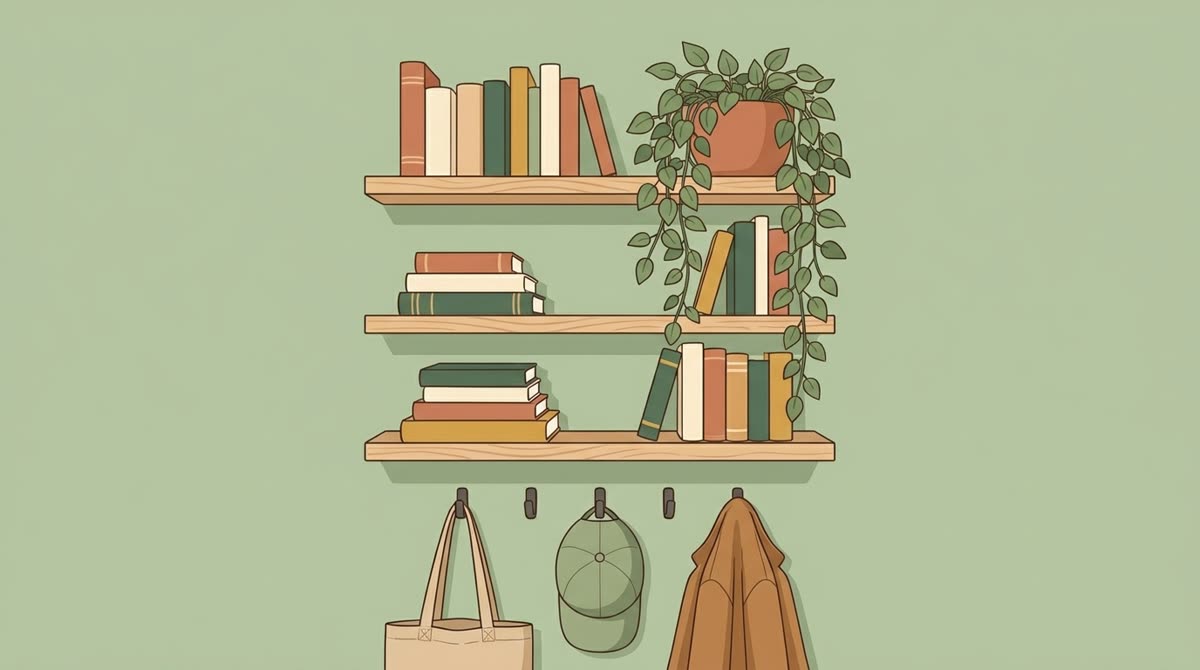
Step 2: Use vertical space
In a small room the floor is limited, but the walls often are not. Wall shelves, hooks, and over-the-door racks move items off the floor and keep frequently used things in sight.
- Mount shelves at a height you can reach without a chair for daily items.
- Use hooks for bags, hats, and jackets that tend to pile up on chairs.
- Check the weight limit of any shelf or hook and the type of wall you will mount it on.
Heavy shelves should be fixed into a solid wall with suitable anchors. If you rent, ask your landlord before drilling, or consider freestanding shelving.
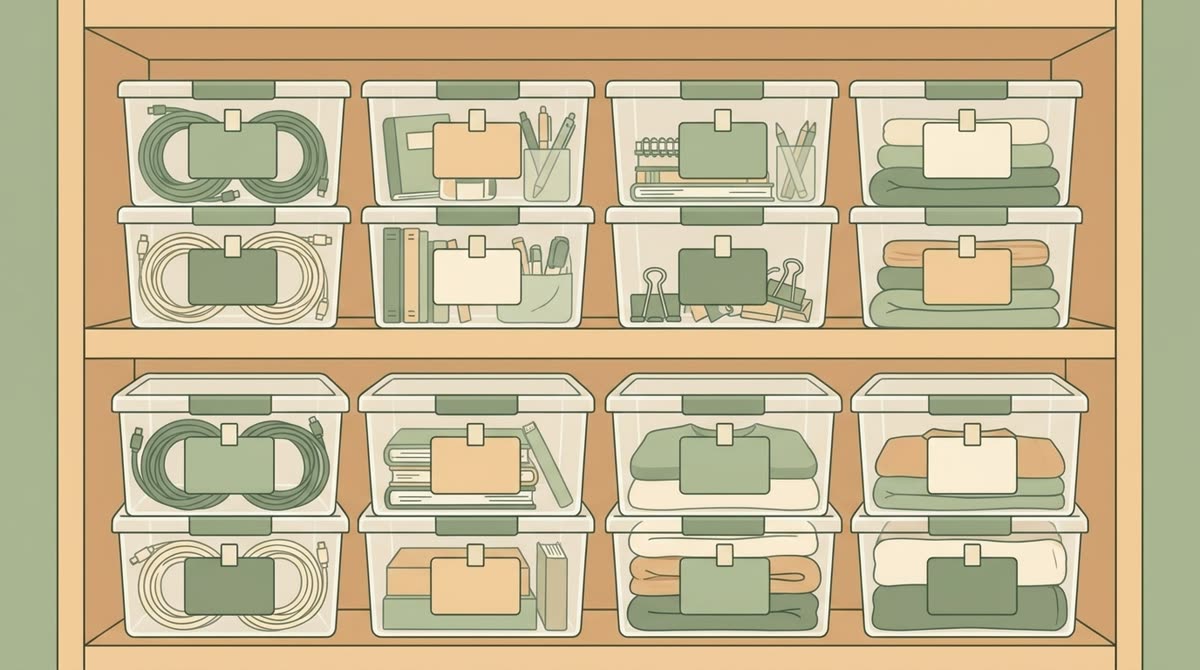
Step 3: Group items into clear boxes
Grouping similar items together makes them easy to find. Clear boxes let you see the contents at a glance, and labels save you from opening every lid.
- Group by use (for example cables, stationery, or seasonal clothes).
- Choose boxes in a few matching sizes so they stack neatly.
- Leave a little empty space in each box so it does not overflow.
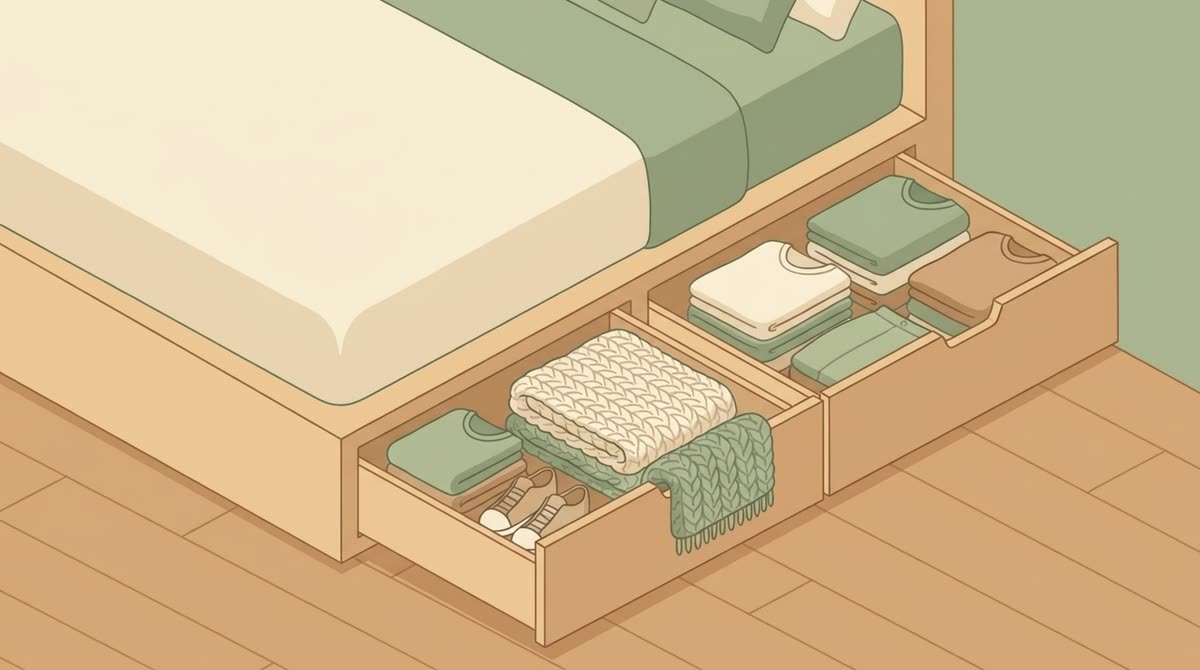
Step 4: Do not ignore the space under the bed
The area under a bed is one of the largest unused spaces in a small room. Shallow drawers or boxes with a lid are good for off-season clothes, spare bedding, and shoes.
Measure the height between the floor and the bed frame first, so the storage you choose actually slides in.
Step 5: Choose furniture that does more than one job
A bed with drawers, a bench with hidden storage, or a desk that folds away can replace several single-purpose pieces. Multi-purpose furniture helps most when floor space is the main limit.
Step 6: Measure before you buy
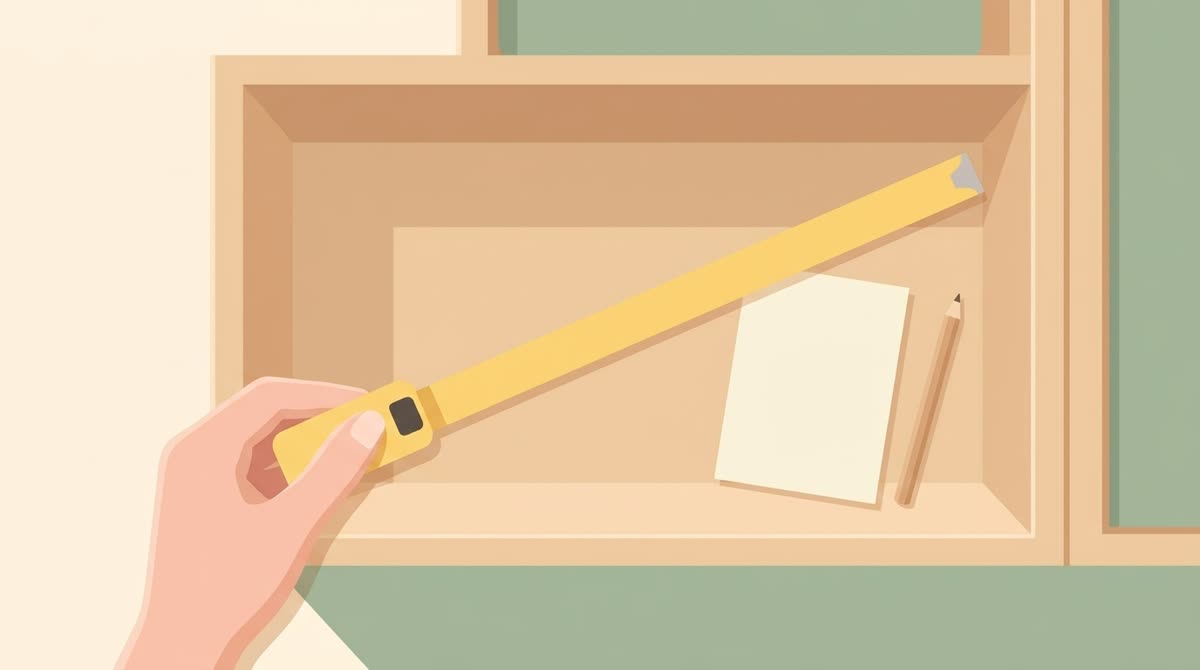
A few minutes with a tape measure can prevent most returns. Write the measurements down and take them with you when you shop.
- Measure the width, depth, and height of the space where the storage will go.
- Check door and drawer clearance so nothing blocks the way.
- Look at the product dimensions and the weight it can hold.
- Choose materials that suit the room (for example moisture-resistant in humid places).
- Read buyer reviews that mention a similar room size.
Frequently asked questions
Where should I start organizing a small room?
Start with one drawer or one shelf and sort it fully. Small wins build the habit and show you how much space you can free without buying anything.
Are clear boxes better than opaque ones?
Clear boxes make contents easy to see, which is handy for frequently used items. Opaque boxes can look tidier for things you do not need to see, so many people mix both.
How do I keep a room tidy after organizing?
Give every item a home, and put things back after use. A quick five-minute reset at the end of the day is usually enough to stop clutter from building up.